"I had a chance to ask Dad about his experience hoeing beans. He did it the summers he was 14 and 15, so that would have been 1937 and 1938. He said he worked on Central Ridge. The pay was $2 for a 10-hour day hoeing, and $2.50 for a 12-hour day during harvest. He said he slept on the floor in a tool shed using a couple of quilts he'd brought, and that the food was good and provided as part of the job.
 "He said again that the farmer carried his checkbook with him (I was thinking it was a wallet), and if someone didn't do a good job on the weeds or sharpened his hoe too often, he'd pay him off on the spot and hire someone waiting on the sidelines. Dad said each hoer had his own row and worked his way down. He said he thought it was a good job to get. I can't imagine. Times are so different now. I think he said the name of one of the farmers was Mossman, and he mentioned another but it wasn't familiar to me.
 "Oh, and he said they were 'regular' white or red beans, sounding like small red beans and navy beans."
That's just great information. And you know, hoeing isn't an easy job. You have to get down under the weed and lift it out by the root, not just chop off the top. And hoeing acres of beans! Well -- it boggles my mind. And to think we had the kids do it! I'm sure it was a good kid job. Not only is he earning money, but he's eating and sleeping away from home.What could be better?
Now I wonder how many times the beans had to be hoed between planting and harvesting. Does anyone know?
Neighbor Pete recently recounted how his dad used to tell him stories about the good old days at Gilbert. "You know," Pete said, "I got so tired of hearing about those things. Dad would tell it over and over and when he got real old and began to make mistakes in his stories, I'd correct him. And now do you think I can remember those old stories? I would give anything to hear Dad tell me again." I suppose it's that way for most of us. We should do more oral history work.
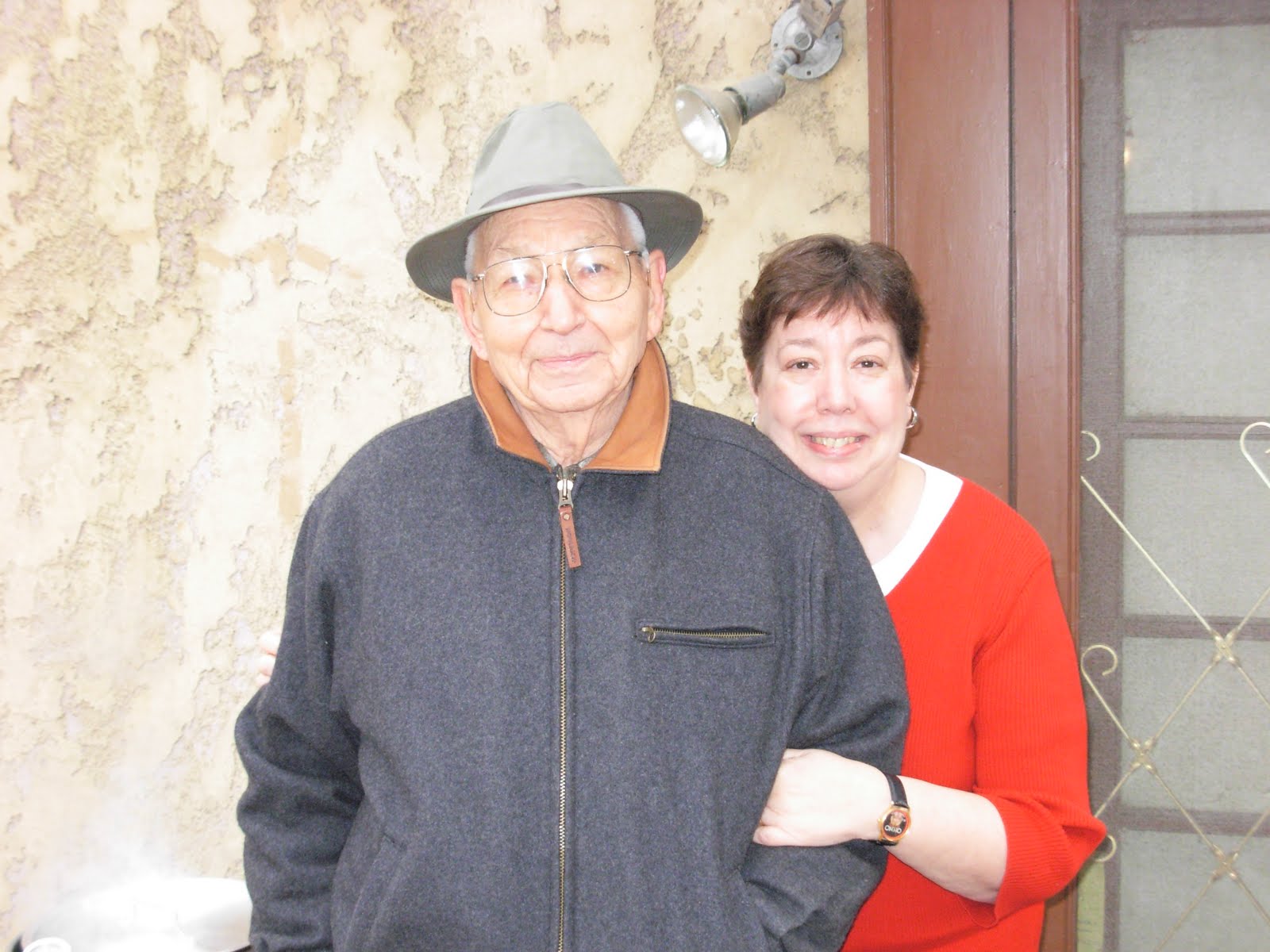
[The picture above is of my childhood friend, Chris, with her dad, Harry. Harry and Mary Lou live in the house they built where Chris mostly grew up, and they're the only people I can think of in my old hometown who are still right where they were when I was a child. I'm comforted by that.] KW
